Why are façade connections important?
The building envelope may be non-loadbearing in structural terms, but the connections that support it have an important job to do. Façade fixings transfer the loads generated by the façade system back to the primary structure while helping installers position panels, curtain wall units and brackets accurately.
The connection strategy needs to reflect the loads acting on the façade, the supporting concrete or steel structure, expected movement and the tolerances that will occur during construction. Wind loads, dead loads, installation loads and the geometry of the façade can all influence the fixing arrangement.
For this reason, façade connection systems are most effective when they are coordinated early between the façade engineer, structural engineer, main contractor, frame contractor and specialist connection supplier.
What types of façade fixings are used?
The appropriate façade fixing method depends on the structure and the façade design. At the structural interface, the main approaches are cast-in anchor channels and post-installed anchors. With a cast-in system, the channel provides the structural fixing point; compatible T-head bolts are used within the channel, while façade brackets connect the curtain wall or cladding system back to that fixing point.
Cast-in anchor channels are positioned before the concrete is poured and create an adjustable fixing zone in the completed structure. PohlCon UK offers JORDAHL® JTA cast-in anchor channels with compatible T-head bolts for safe, adjustable concrete connections. JTA W hot-rolled channels are used for applications including curtain wall connections and can accommodate static and dynamic load requirements.
Façade brackets form the connection between the curtain wall or cladding system and the structural fixing point. Their design needs to suit the load path, required adjustment and geometry of the façade system.
Post-installed anchors are the alternative fixing method where appropriate, particularly where fixing positions are determined after the concrete has cured. They require drilling into the completed concrete, so selection should consider both structural performance and the installation process.
What is the role of cast-in channels in façade construction?
Cast-in channels can provide a planned connection point within the concrete structure before façade installation begins. Rather than drilling individual fixing positions after the concrete is complete, the channel creates a continuous zone in which compatible bolts can be positioned and adjusted.
This can be particularly useful on curtain wall and cladding installations where the final bracket position needs to accommodate both structural and façade tolerances. The channel can be coordinated with the reinforcement and formwork before the pour, while the façade contractor retains adjustment when the bracket is installed later.
The result is an engineered connection that combines load transfer with practical on-site flexibility.
Can cast-in channels support safer façade installation?
Yes. Where fixing positions can be planned in advance, cast-in anchor channels can reduce or avoid the drilling required for post-installed anchors. Drilling into cured concrete can expose operatives to dust and high noise levels, while repeated use of powered drilling tools can contribute to hand-arm vibration exposure.
Reducing these activities at the design stage can therefore have a health and safety benefit as well as an installation benefit. HSE guidance on CDM 2015 summarises the designer’s main duty as: “The designer’s main duty is to eliminate, reduce or control foreseeable risks that may arise during construction work.” Specifying cast-in channels where appropriate can support this approach by designing out or reducing foreseeable drilling-related hazards.
A cast-in solution does not remove the need for suitable risk assessment and controls on site, but it can reduce the amount of post-installed drilling required for planned façade connections.
Why is adjustability important in façade connections?
Façade installation brings together components manufactured and installed at different stages of a project. Even when each trade works within its specified tolerances, the final connection still needs sufficient adjustment to bring the structure and façade together accurately.
Concrete tolerances: The as-built position of slab edges and concrete faces can vary within permitted limits.
Structural tolerances: Steelwork, decking and other supporting elements can introduce additional positional variation.
Façade positioning: Curtain wall units and cladding panels need accurate alignment to achieve the intended façade line and joint pattern.
Reduced remedial work: An adjustable fixing zone can help accommodate expected variation without unnecessary drilling, welding or modification on site.
Using adjustable façade fixings does not remove the need for accurate design and setting out. It gives the connection system a practical means of accommodating the tolerances that have been allowed for in the design.
How do curtain wall fixings and brackets work together?
Curtain wall systems are generally supported from the building structure through brackets connected at slab edges, concrete cores or other structural locations. The bracket and its fixing system must transfer the relevant loads back into the structure while allowing the façade to be positioned correctly.
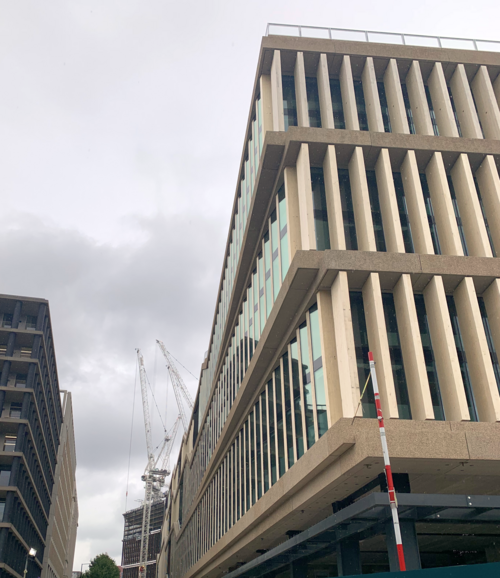
For slab-edge and metal deck applications, PohlCon UK offers the JTA-SD Façade Connection Channel, a cast-in channel solution developed for façade connections at metal deck floors. PohlCon products were supplied at Google Headquarters, King’s Cross, including JORDAHL® cast-in channels for façade, balustrade and precast concrete connections, plus JTA-SD systems for structural support applications.
Where the design requires resistance to significant loads along the channel as well as tension and transverse shear, JORDAHL® JXA W toothed anchor channels provide a mechanically interlocking connection with matching toothed T-head bolts. PohlCon identifies curtain wall façade connections among the typical applications for the JXA W range.
Where are façade connection systems used?
Engineered façade connections are used across many forms of construction, including:
- unitised curtain wall systems
- cladding and rainscreen support
- precast façade connections
- slab-edge façade brackets
- connections to concrete cores and walls
- high-rise and complex building envelopes.
Selection should consider the design loads, supporting structure, concrete strength, edge distances, corrosion exposure, fire requirements, movement strategy and the adjustment required during installation.
Why should façade connections be designed early?
Façade fixings sit at an important interface between the building structure and the envelope. If the connection strategy is left until late in the programme, the available fixing zones may conflict with reinforcement, slab edges, decking or other structural details.
Early coordination gives the project team an opportunity to establish load paths, fixing positions and tolerances before the concrete is poured. It also allows specialist cast-in components to be incorporated into reinforcement and formwork drawings at the correct stage.
For complex façades, early technical input can help reduce the likelihood of later site modifications and provide a clearer route from design to manufacture and installation.
PohlCon UK façade connection solutions
PohlCon UK provides engineered products for façade and curtain wall connections, including JORDAHL® JTA anchor channels, T-head bolts and project-specific cast-in connection solutions.
The JTA-SD Façade Connection Channel provides a dedicated cast-in solution for façade connections at metal deck floors, while standard JTA channels provide adjustable connections for applications including curtain walling and structural steelwork.
For load cases requiring secure longitudinal load transfer, JXA W toothed anchor channels use toothed channel lips and matching bolts to create a mechanical interlock. JTA and JXA anchor channels are evaluated under UK Technical Assessment UKTA-0836-22/6149 and European Technical Assessment ETA-09/0338.
PohlCon UK can support project teams with product selection, connection design input and bespoke solutions, helping coordinate the fixing system with the structure, façade loads and installation requirements.
Frequently Asked Questions
What are façade fixings used for?
Façade fixings connect curtain walling, cladding and other façade components back to the main building structure. They transfer the relevant loads while helping accommodate installation tolerances and the positioning requirements of the façade system.
Why are cast-in anchor channels used for façade connections?
Cast-in anchor channels provide an adjustable fixing zone within the concrete structure. Compatible T-head bolts can be positioned along the channel, giving the façade installer flexibility when locating brackets and connected components.
What is the difference between a façade bracket and an anchor channel?
The anchor channel is cast into the concrete and forms the structural fixing point. The façade bracket connects the curtain wall or cladding system to that fixing point and transfers loads between the façade and the structure.
Can façade connections accommodate construction tolerances?
Yes. Adjustable systems such as cast-in anchor channels and compatible T-head bolts can allow fixing positions to be coordinated during installation, helping accommodate the tolerances allowed for within the structural and façade design.
Can cast-in anchor channels offer health and safety advantages?
They can. Where a cast-in channel reduces or removes the need for post-installed drilling, it can help reduce exposure to drilling-related dust, noise and hand-arm vibration. This can support the CDM 2015 principle of eliminating or reducing foreseeable risks through design.
When should façade connections be specified?
Where possible, the connection strategy should be considered during the design stage. Early specification allows fixing zones to be coordinated with reinforcement, formwork, slab edges, façade loads and the planned installation sequence.
Choosing the right façade connection
There is no single façade fixing system that suits every project. The right solution depends on the supporting structure, load case, façade geometry, movement requirements and the amount of installation adjustment required.
Considering façade connections early and selecting an engineered system can help improve coordination, simplify installation and provide a reliable connection between the building structure and its envelope.
Talk to PohlCon UK about the right façade connection solution for your next project.
PohlCon UK. Partner from start to future.