This allows the fixing system to transfer high loads in multiple directions, including along the length of the channel. They are particularly suited to demanding static, dynamic and seismic connections where secure load transfer, adjustability and efficient installation are required.
Why are toothed anchor channels used?
Standard anchor channels provide an adjustable fixing point cast directly into concrete, combining secure load transfer with positional flexibility.
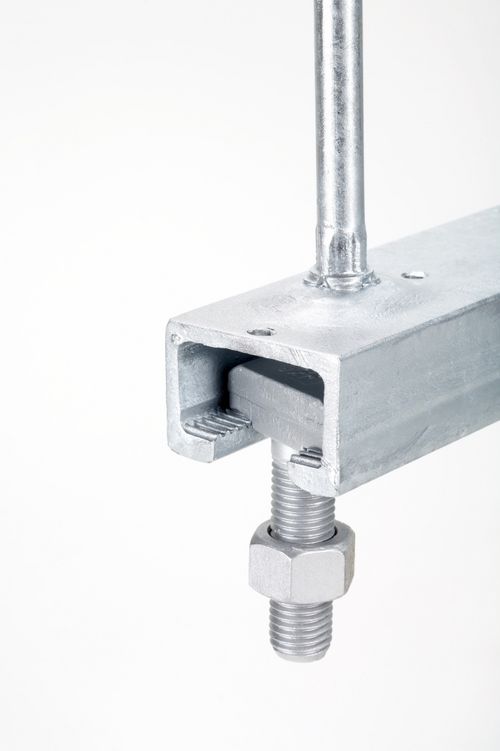
Where significant forces act along the channel, a toothed connection provides additional mechanical interlock between the channel and its matching bolt.
PohlCon’s JORDAHL® JXA W toothed anchor channels are designed for high longitudinal and transverse loads, including demanding dynamic and seismic applications.
What is the difference between smooth and toothed anchor channels?
Both systems are cast into concrete before the connected component is installed. The key difference is how the bolt engages with the channel.
A smooth-lipped anchor channel provides adjustment along the channel and transfers its specified design loads.
A toothed channel uses serrated channel lips and a compatible toothed T-head bolt. When tightened, the teeth interlock to resist movement along the channel.
This makes toothed channels useful where longitudinal loads or demanding load combinations must be managed while retaining an adjustable cast-in fixing system.
How do cast-in toothed channels work?
The anchor channel is fixed to the formwork before the pour, creating a ready-made fixing zone once the concrete has cured.
A compatible toothed T-head bolt is inserted, positioned and tightened. The toothed surfaces interlock while the channel still allows the fixing position to be coordinated with the connected component.
This combines the planning advantages of cast-in channels with performance for more highly loaded connections.
What are the advantages of toothed anchor channels?
For the right application, toothed anchor channels can provide several practical and technical benefits:
- Multi-directional load transfer: Suitable systems can transfer high loads in longitudinal and transverse directions.
- Secure mechanical interlock: The toothed channel and matching bolt engage to resist slippage along the channel.
- Adjustability: The bolt can be positioned along the channel to accommodate construction tolerances.
- Reduced drilling: The cast-in fixing can reduce or avoid post-installed drilling for the planned connection.
- Dynamic performance: PohlCon’s hot-rolled JXA W range is designed for demanding applications including dynamic and seismic loads.
The appropriate channel, bolt, material and design capacity must always be selected for the specific load case and project requirements.
Where are toothed anchor channels used?
Toothed cast-in channels are suited to connections where higher loads, longitudinal forces or demanding operating conditions need to be addressed. Typical applications for JORDAHL® toothed channel systems include:
- façade connections
- highly stressed precast concrete connections
- tunnel construction and dynamic connections
- crane track and runway anchorages
- heavy structural and secondary steel connections
- seismic or vibration-sensitive applications
- other connections requiring secure longitudinal load transfer.
Specification should consider design loads, concrete condition, edge distances, embedment, corrosion exposure, fire requirements and load direction.
Why should cast-in channels be specified early?
Anchor channel performance is only one part of the connection. Its position must also coordinate with the concrete, reinforcement, formwork and attached component.
Early coordination allows engineers, contractors and specialist suppliers to resolve these interfaces before the concrete is poured.
For toothed anchor channels, identifying load directions early helps the team select the right system before work reaches site.
PohlCon UK toothed anchor channel solutions
PohlCon UK supplies JORDAHL® anchor channels for cast-in connections, including the JXA W hot-rolled toothed anchor channel range.
JXA W channels are available in 29/20, 38/23, 53/34 and 64/44 profiles. With suitable toothed T-head bolts, they form an interlocking connection for high loads. The range is covered by European Technical Assessment ETA-09/0338.
PohlCon also offers JXA-PC W toothed anchor channels for specialist applications, alongside smooth and toothed options across the wider JORDAHL® range.
The PohlCon UK team can support channel selection and specification for façade, precast and other highly loaded structural connections.
Early technical input helps coordinate the channel, bolt, reinforcement and installation requirements.
Frequently Asked Questions
Are toothed anchor channels cast into concrete?
Yes. JXA toothed anchor channels are positioned before the pour. After curing, matching toothed bolts are installed into the channel to form the connection.
What is the main difference between a standard anchor channel and a toothed channel?
The serrated channel and matching bolt create a mechanical interlock that resists longitudinal forces while retaining positional adjustment.
Can toothed anchor channels accommodate construction tolerances?
Yes. The bolt can be positioned along the channel before tightening, helping accommodate construction tolerances.
What applications are JORDAHL® JXA toothed channels designed for?
PohlCon identifies JXA W systems for façade connections, highly stressed precast connections, tunnels, crane track anchorages and other high, dynamic or seismic load applications.
Choosing the right anchor channel for the load case
Not every connection requires a toothed channel. The key is to understand the forces acting on the fixing and specify the anchor channel accordingly.
Where significant longitudinal, dynamic or seismic loads apply, toothed anchor channels combine secure load transfer with the flexibility of a cast-in system.
Talk to PohlCon UK about the right anchor channel solution for your next project.
PohlCon UK. Partner from start to future.