

Why are steel-to-concrete fixings important?
Reliable connections between steel and concrete are essential across modern construction.
From façades and structural steelwork to metal decking, lift installations and building services, the choice of steel-to-concrete fixings can affect load transfer, installation efficiency, construction tolerances and long-term performance.
Different types of concrete fixings and concrete anchors are available, so the right solution depends on the application, expected loads, installation sequence and structural requirements.
What is the difference between cast-in and post-installed concrete fixings?
Concrete connections generally fall into two broad categories.
Post-installed anchors are installed into hardened concrete after it has cured. These can be suitable where fixing locations are determined later in the construction process.
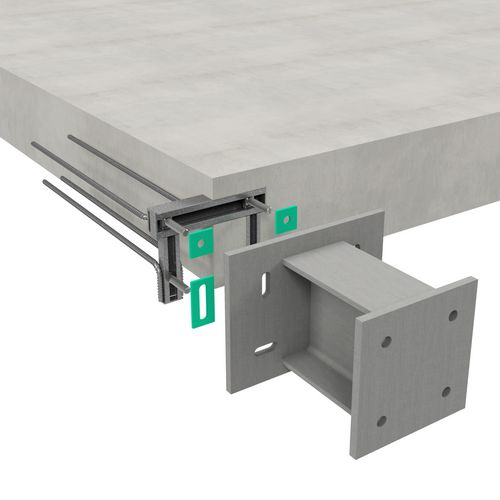
Cast-in systems are positioned within the formwork before the concrete is poured. Once the concrete has cured, they provide a predetermined fixing zone ready for the connected component.
Where the connection requirements are known early, cast-in systems can offer significant benefits in terms of buildability and installation flexibility.
What is a cast-in anchor channel?
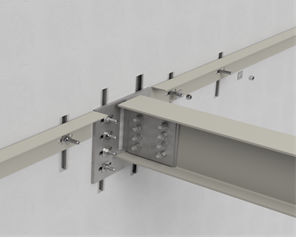
A cast-in anchor channel is embedded into the concrete during construction and used with compatible T-head bolts to create an adjustable fixing point.
Rather than providing one fixed anchor position, the channel allows the bolt to be positioned along its length. This makes it easier to accommodate site tolerances and final component positions.
For contractors, this flexibility can simplify installation. For designers, it creates an engineered connection that can be incorporated into the structural design from an early stage.
What are the advantages of cast-in concrete connections?
Cast-in anchor channels can provide several benefits:
- Adjustability: Bolt positions can be changed along the channel.
- Planned load transfer: The fixing system can be designed into the structure before concrete works begin.
- Reduced drilling: Less post-installed drilling into completed concrete may be required.
- Efficient installation: Compatible bolts can be inserted and positioned once the concrete structure is ready.
- Improved coordination: Fixing zones can be coordinated with reinforcement, formwork and connected components.
These advantages can be particularly valuable on complex projects where tolerances and installation sequencing need to be carefully managed.
Where are steel-to-concrete connections used?
Steel-to-concrete fixing systems have applications throughout construction, including:
- façade and curtain wall connections
- structural and secondary steelwork
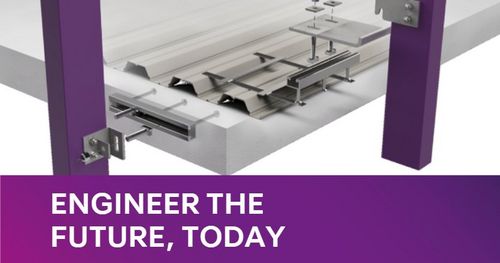
- metal decking connections
- lift and elevator installations
- building services
- precast concrete connections
- brackets and support structures.
The right fixing solution will depend on factors such as load requirements, concrete strength, edge distances, embedment, corrosion exposure, fire requirements and the degree of adjustability needed.
Why should concrete fixings be considered early?
Connections may represent a relatively small part of the overall structure, but late changes can have a major impact on buildability.
Early coordination between structural engineers, contractors, connection designers and specialist suppliers helps ensure that fixing locations are considered alongside reinforcement, formwork and construction sequencing.
For cast-in systems in particular, early planning can help reduce site modifications and create a more efficient route from design to installation.
PohlCon UK anchor channel solutions
PohlCon UK offers a range of JORDAHL® cast-in anchor channels for engineered steel-to-concrete connections.
The range includes JTA anchor channels for general fastening applications and JXA toothed anchor channels for applications where loads also need to be transferred along the channel.
Typical applications include façade connections, elevator guide rails, structural steelwork, metal decking, building services and precast concrete connections.
Used with compatible JORDAHL® T-head bolts, the channels provide an adjustable fixing point cast directly into the concrete, helping contractors accommodate construction tolerances while reducing the need for unnecessary post-installed drilling.
PohlCon UK also provides technical support from specification through to installation, helping project teams identify an appropriate connection solution for the required load, application and construction sequence.
Frequently Asked Questions
What are concrete anchors used for?
Concrete anchors are used to secure steelwork, brackets, equipment and other components to concrete structures. They may be cast into the concrete or installed after the concrete has cured.
Are cast-in anchor channels adjustable?
Yes. One of the main advantages of an anchor channel is that compatible T-head bolts can be positioned along the channel, providing greater flexibility than a single fixed anchor location.
When should steel-to-concrete fixings be specified?
Where possible, fixings should be considered during the design stage. Early specification can improve coordination with reinforcement and formwork and reduce the likelihood of later site modifications.
What applications are PohlCon anchor channels suitable for?
PohlCon anchor channel systems can be used for applications including façades, structural steelwork, metal decking, lifts, building services and precast concrete connections.
Choosing the right concrete connection
Whether the requirement is for steel-to-concrete fixings, concrete connections, concrete fixings or concrete anchors, the most effective solution depends on the load, application and construction sequence.
Considering the connection early and using an engineered system can help improve installation efficiency, manage tolerances and deliver a reliable connection throughout the life of the structure.
Talk to PohlCon UK about the right connection solution for your next project.
PohlCon UK. Partner from start to future.